

- The New Paradigm of Global Expansion: Digitalization as a Driver
- From traditional to digital internationalization
- 4 Technological Pillars for International Expansion
- 1. Cloud Computing and Process Scalability
- 2. Cross-Border E-commerce
- 3. Big Data, Artificial Intelligence, and Localization
- 4. Smart Logistics and Supply Chain Integration
- Strategic Roadmap: Step-by-Step for Digital Internationalization
- Step 1: Digital Maturity Diagnosis and Market Selection
- Step 2: Adaptation and Digital Localization
- Step 3: Logistics Planning and Operational Integration
- Step 4: Launch and Go-to-Market Strategy
- Challenges of Digital Internationalization (And How to Overcome Them)
- Success Stories: Practical Inspiration
- Conclusion: The Future Belongs to Connected Companies
- Suggested next steps:
- Frequently Asked Questions
- How does digital transformation benefit the internationalization of companies?
- What role does a strategic consulting firm in Murcia play in this process?
- Why is international SEO key to selling abroad?
There was a time when the internationalization of companies was a process reserved exclusively for corporate giants. It involved costly trade missions, opening physical offices abroad, cumbersome local distribution chains, and an astronomical capital investment before seeing the first cent of return.
Today, that old paradigm has become obsolete.
Technological acceleration has democratized access to global markets. A report from the McKinsey Global Institute highlights that cross-border data flows and digital connectivity have an impact on global GDP greater than that of traditional trade in physical goods. In fact, the World Trade Organization (WTO) defines this new era through the concept of digital trade: transactions that are ordered or delivered digitally, which drastically reduces entry barriers for SMEs.
If your company is looking to expand its borders, the question is no longer whether you should take the step, but how to lead the digital transformation: businesses all over the world are already doing it in an agile, profitable, and sustainable way. In this guide, which gathers the experience and vision of our strategic consulting in Murcia, we will explore how technology is the ultimate vehicle to take your business to the global stage.
The New Paradigm of Global Expansion: Digitalization as a Driver
Digital internationalization is not simply about translating your website into another language or enabling international shipping on your online store. It involves a deep shift in the business model and organizational culture.
From traditional to digital internationalization
| Aspect | Traditional Internationalization | Digital Internationalization |
|---|---|---|
| Initial Investment | Very high (offices, warehouses, local staff). | Controlled (cloud infrastructure, SaaS). |
| Launch Time | From months to years. | From weeks to months. |
| Scalability | Linear and slow. | Exponential and agile. |
| Customer Relationship | Intermediated by local distributors. | Direct (Direct-to-Consumer or D2C model). |
| Data Usage | Reactive and based on historical reports. | Proactive and in real time. |
By adopting a digital approach, companies gain agility. They can test product demand in a new market with targeted digital marketing campaigns before shipping a single container of merchandise. Technology minimizes financial risk and allows for an immediate pivot if results are not as expected.

4 Technological Pillars for International Expansion
To build a solid structure, many SMEs rely on a digital kit digitalizing agent to subsidize and implement the necessary tools detailed below. These are the four indispensable pillars:
1. Cloud Computing and Process Scalability
Cloud computing eliminates the need for physical local servers and allows your systems (such as ERP or CRM) to be accessible from anywhere in the world. Advanced business management tools, like SAP Business One Cloud, make it possible to centralize information for multiple currencies, tax regulations of different countries, and geographically distributed warehouses on a single control screen. This ensures that decision-making is agile and based on a single source of truth.
2. Cross-Border E-commerce
E-commerce no longer has borders. Platforms like Shopify Plus, Magento (Adobe Commerce), or custom integrations like VKommerce allow managing multiple digital storefronts (multi-store) adapted to each region. This includes automating prices according to local currency, dynamic calculation of import taxes, and integration with global payment gateways (like Stripe, Adyen, or PayPal) and local payment methods (such as Pix in Brazil or iDEAL in the Netherlands).
3. Big Data, Artificial Intelligence, and Localization
Artificial Intelligence (AI), data analysis, and B2B competitive intelligence make it possible to predict consumer trends in specific geographical areas and stay ahead of competitor moves. Furthermore, AI has revolutionized localization. Localizing is not just translating; it is adapting the user experience to the local culture. From optimizing the tone of voice in texts to automated customer service through intelligent conversational chatbots operating 24/7 in more than 50 languages, technology builds a sense of closeness with foreign customers.
4. Smart Logistics and Supply Chain Integration
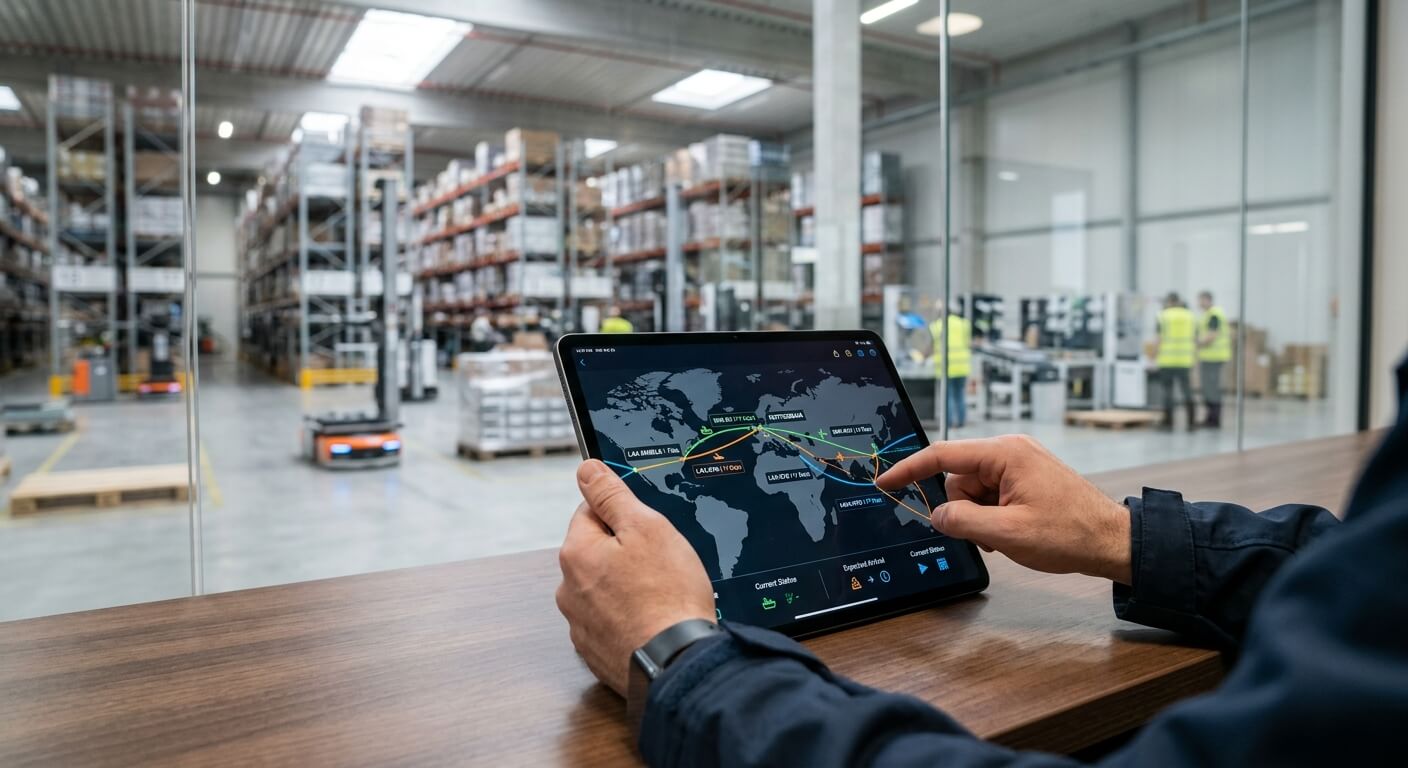
Selling digitally is easy; physically delivering the product on time is the real challenge. The digital transformation of logistics involves connecting your online store with international logistics operators (3PL or 4PL) via APIs. This allows for automated inventory, real-time tracking of shipments for the customer, and efficient management of reverse logistics (returns), a critical factor for customer satisfaction abroad.
Strategic Roadmap: Step-by-Step for Digital Internationalization
Carrying out this process requires a methodical approach. Below, we present the recommended roadmap for a successful expansion:
[Phase 1: Diagnosis] ➔ [Phase 2: Localization] ➔ [Phase 3: Operational Integration] ➔ [Phase 4: Go-to-Market]
Step 1: Digital Maturity Diagnosis and Market Selection
Before looking outward, you must look inward. Are your internal processes digitalized and automated? If your team still relies on manual spreadsheets to manage inventory, internationalization will crash your operation.
- Analyze your current data: Examine your website and social media analytics. Are you receiving organic traffic from other countries? Are there foreign users trying to buy? Those are indicators of latent demand.
- Smart selection: Prioritize markets with high internet penetration, robust digital payment infrastructure, and a favorable legal framework for e-commerce.
Step 2: Adaptation and Digital Localization
The customer experience must feel completely local. A user in Germany has privacy expectations and payment methods very different from those of a consumer in Mexico or Japan.
- Legal Compliance and Privacy: Make sure you comply with strict data protection regulations such as GDPR in Europe or CCPA in California.
- Payment Gateways: Integrate the preferred payment methods of the target country. Failing to offer the local payment method is one of the main reasons for shopping cart abandonment.
Step 3: Logistics Planning and Operational Integration
The efficiency of the back-office is the engine of your internationalization. Configure your digital ecosystem so that information flows seamlessly:
- Connect your digital sales channel (E-commerce or Marketplace like Amazon/Alibaba) directly to your ERP.
- Automate the generation of customs documents and international invoices to avoid border delays.
Step 4: Launch and Go-to-Market Strategy
Once the infrastructure is ready, it is time to deploy your international marketing plan to effectively attract customers.
- International SEO: Optimize your website for local search engines (for example, Google in the West, but Baidu in China or Yandex in Russia). Having the support of an international SEO agency will help you correctly structure the hreflang tags so that engines identify the correct language version and position the content optimally in each geographic region.
- Targeted Digital Advertising: Use pay-per-click (PPC) campaigns on social networks and search engines, hyper-segmenting audiences to maximize return on ad spend (ROAS).
Challenges of Digital Internationalization (And How to Overcome Them)
Despite the immense advantages, the digital path also presents specific challenges that you must anticipate:
- Data Regulations and “Data Localization”: Countries like China or Russia require that their citizens’ data be stored on servers physically located in their territory. Solution: Use global cloud service providers that have data centers in multiple geographical regions and ensure compliance with these local laws.
- Cybersecurity: By opening global digital channels, you expose yourself to a higher volume of cyberattacks. Solution: Implement advanced security protocols (SSL encryption, multi-factor authentication, PCI-DSS compliance for payments).
- Resistance to Internal Change: Digital internationalization requires the human team to learn to use new digital tools and adopt an agile mindset. Solution: Design continuous training plans and foster a corporate culture that rewards experimentation and rapid learning.
Success Stories: Practical Inspiration
Learning from those who have already traveled the path is the best way to avoid costly mistakes. Two clear examples demonstrate the power of global digitalization:
- Miniso: This popular retail chain radically optimized its global supply chain and large-scale inventory control by centralizing data with world-class ERP tools. This allowed them to efficiently supply thousands of stores across multiple continents, adapting stock in real time according to consumer trends in each region.
- Totto: The renowned fashion and accessories multinational of Colombian origin based its international success on its capacity for adaptation and digital transformation. They managed to expand to more than 50 countries by combining physical sales channels with a robust omnichannel platform that allows them to interact directly with the global consumer, customizing the offer according to the geographic market.
Conclusion: The Future Belongs to Connected Companies
Internationalization is no longer a matter of physical presence, but of connectivity, data, and operational agility. Digital transformation has torn down physical borders, allowing even the youngest and smallest companies to look eye-to-eye at their industry leaders anywhere on the planet.
To successfully start this expansion journey, the first step is not to buy a plane ticket to your next target market, but to audit your current technological infrastructure. Make sure your internal processes are ready to scale and that you have the right tools to make data-driven decisions.
Suggested next steps:
- Audit your tech stack: Are your current systems capable of supporting multiple currencies, languages, and distributed warehouses?
- Identify your hot markets: Review your website analytics to discover which countries your current international visits are organically coming from.
- Train your team: Prepare your human talent in key digital skills such as cross-border trade, international SEO, and data analysis.
Frequently Asked Questions
How does digital transformation benefit the internationalization of companies?
Digital transformation allows companies to expand quickly and with less investment, using cloud infrastructure, cross-border e-commerce, and real-time data analysis.
What role does a strategic consulting firm in Murcia play in this process?
A strategic consulting firm in Murcia guides SMEs in diagnosing digital maturity, market selection, and implementing subsidized solutions such as the Kit Digital.
Why is international SEO key to selling abroad?
International SEO, coordinated by a specialized agency, technically adapts your website (hreflang tags, languages) to capture qualified organic traffic and position your brand in search engines worldwide.

