

- The Pricing Dilemma: Why is “Cost-Plus” so 90s?
- 1. Switch to “Value-Based Pricing” (Or how to stop navel-gazing)
- Not all customers are equal (fortunately)
- 2. Shrinkflation and “Skimpflation”: The art of magic (without the top hat)
- What is this trick?
- “Skimpflation”
- 3. Be fast, be dynamic (Be water, my friend)
- 4. The menu trick: Unbundling
- 5. Communication: Don’t be the one who breaks bad news via WhatsApp
- 6. Contract Shielding (For B2B folks)
- 7. The power of the “Combo” (Strategic Bundling)
- Conclusion: Still here? That already says a lot about you
Hello! Come in, make yourself comfortable. Let’s talk about that topic that makes CFOs’ left eyes twitch and gives customers a nostalgic longing for 2019 prices: inflation.
I know, I know. Reading about pricing strategies sounds about as exciting as watching grass grow or waiting for a Windows update in the middle of a deadline. But I promise that if you stick with me for the next five minutes, not only will you understand how to adapt your rates in unstable markets without losing competitiveness, but we’ll do it without your clients wanting to burn your office down (metaphorically, I hope).
Let’s be honest: inflation is like that guest who shows up to your party uninvited, drinks the expensive whiskey, and then complains about the music. It’s the “invisible tax” that forces us all to juggle. But we didn’t come here to cry; we came to break out the calculator with style.
The Pricing Dilemma: Why is “Cost-Plus” so 90s?
Traditionally, the business world has used the “Cost-Plus” model. It’s simple: if it costs you €100 to make a product and you want to earn 20%, you sell it for €120. Elementary school math, right?
The problem is that with current inflation, if the cost rises to €110 tomorrow and you’re still head-in-the-clouds, your margin evaporates faster than ice cream in August. If you wait until the end of the quarter to review your prices… well, you might end up paying to work. And nobody wants that (insert dramatic pause here).
Experts at McKinsey & Company state that using data to adjust prices can boost your returns by 2% to 4%. It sounds small, but that’s the difference between going on vacation to the Bahamas or settling for an inflatable pool on your balcony.
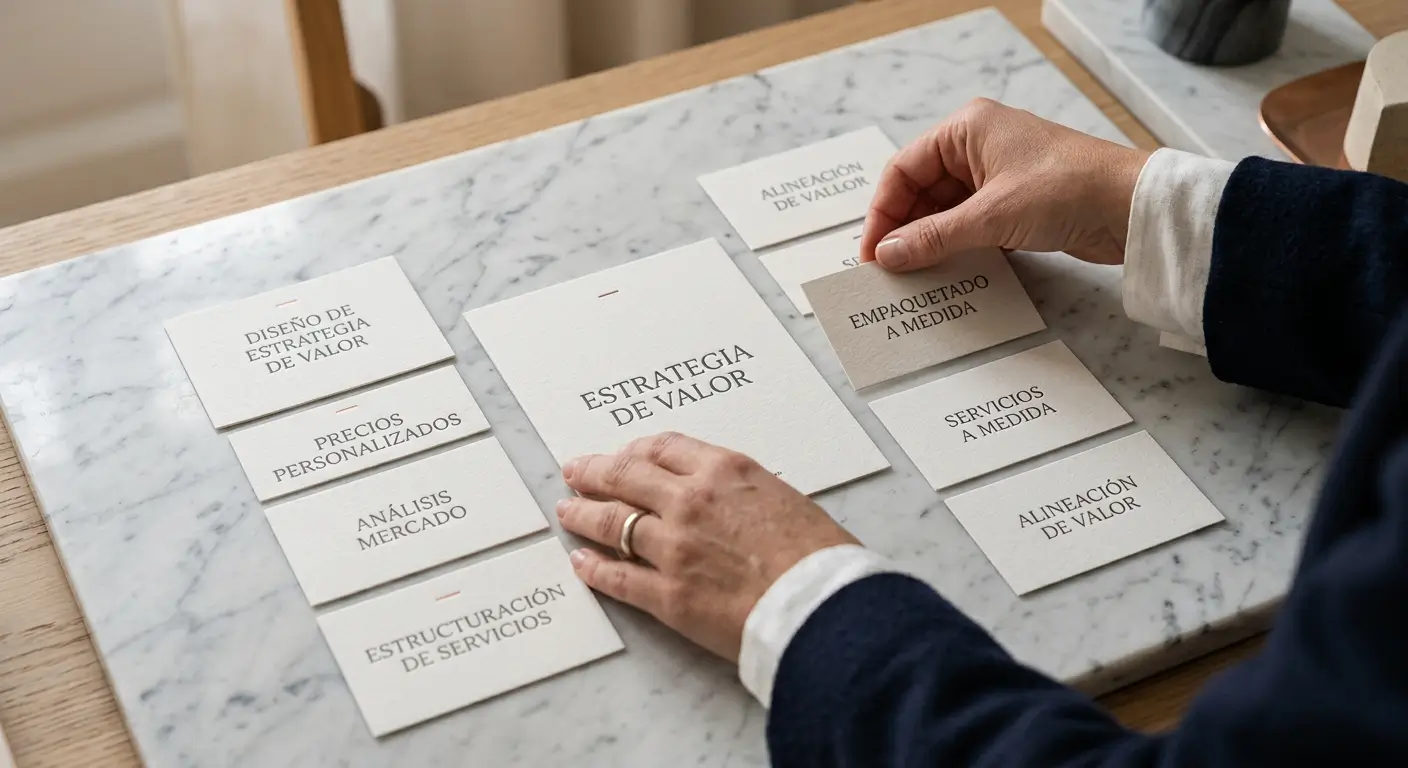
1. Switch to “Value-Based Pricing” (Or how to stop navel-gazing)
Instead of looking at how much it costs you to do things, look at how much it solves the client’s life. In lean times, people pay if they understand what they get in return. This is one of the keys to how to adapt your rates in unstable markets without losing competitiveness: perceived value rules.
Not all customers are equal (fortunately)
You have the “bargain hunter” who will abandon you for a ten-cent difference and the “premium” client who values that you’re always there.
- Step 1: Identify who is who.
- Step 2: Be bold with pricing on your star services and hold your ground on products where the competition is a bloodbath.
2. Shrinkflation and “Skimpflation”: The art of magic (without the top hat)
Have you noticed that your bag of chips now has more air than a self-help seminar? That’s Shrinkflation.
What is this trick?
You keep the price, but you remove product. It’s a psychological way not to scare the staff.
- The risk: If the client feels cheated, your brand loyalty will die faster than a character in Game of Thrones. Brands like Doritos have already done it… and here we are, still buying cheese-flavored air.
“Skimpflation”
It’s the ugly cousin of shrinkflation. You don’t remove quantity, but quality. That hotel that no longer cleans the room daily or that cookie that now uses palm oil instead of butter. Use it with caution, because customers have a very keen nose for “cheap.”
3. Be fast, be dynamic (Be water, my friend)
If you live in a market where prices rise every week, an annual printed catalog is as useful as an ashtray on a motorcycle.
Take inspiration from Uber or airlines. Dynamic Pricing sounds like science fiction, but for an SME, it can be as simple as:
- Reviewing prices every week.
- Adding fuel or material surcharges that you remove when the situation improves.
4. The menu trick: Unbundling
Remember when planes included a suitcase, food, and a smile? Now everything is extra. That’s unbundling. Instead of a €1,000 package, sell the base for €850 and charge for the extras.
Use the “Good-Better-Best” technique:
- Basic: Just enough to not lose the thrifty client.
- Recommended: Your crown jewel.
- Premium: For the person who wants the full pack and doesn’t look at the bill.
If inflation tightens, the client will drop from “Better” to “Good,” but—aha!—they will stay with you.
5. Communication: Don’t be the one who breaks bad news via WhatsApp
How you say you’re going to raise prices is almost more important than the raise itself. Transparency is your best friend (after your accountant).
- Warn them first: Nobody likes a surprise at the checkout.
- Explain the “Why”: “Hey, cotton has gone up 30% and we want to keep paying decent wages.” People tend to be understanding if you don’t treat them like they’re stupid. According to the Harvard Business Review, if the blame lies with external factors, the client is usually much more tolerant.

6. Contract Shielding (For B2B folks)
If you sign a fixed-price contract for three years in the middle of inflation, you’re putting a noose around your neck. Use Escalation Clauses. If the CPI rises, your price rises. It’s fair, it’s logical, and it prevents you from ending up working for free like many construction companies did in 2021. Don’t be that guy.
7. The power of the “Combo” (Strategic Bundling)
Sometimes, to raise the price of something, you have to mix it with something else. It’s the “Happy Meal” effect. If you bundle products, it’s harder for the customer to compare the individual price and they feel like they’re getting a “great deal,” even if you’re protecting your profit margin.
Conclusion: Still here? That already says a lot about you
Inflation isn’t the end of the world; it’s just a harder level in this video game called “owning a business.” Learning how to adapt your rates in unstable markets without losing competitiveness isn’t about being the most expensive; it’s about being the smartest.
Your homework for tomorrow:
- Look at which products are losing you money right now.
- Stop using “Cost-Plus” as if we were in 1985.
- Talk to your sales team. They are the ones in the trenches and they need arguments, not just excuses.
The key is agility. In this market, standing still is the fastest way to move backward.
Is your company ready for the next quarter, or are you going to let inflation choose the menu? Review your costs today… your future self will thank you with a smile and a much healthier business.