

- 1. The 2021 trauma (or why we no longer trust distant ships)
- 2. What exactly is this? (Explained for humans)
- Goodbye to “Just-in-Time,” hello to “Just-in-Case”
- 3. The engines of the great move (It’s not just logistics, it’s politics)
- 4. Mexico: The “influencer” of industrial relocation
- 5. Eastern Europe: The workshop of the European Union
- 6. Not everything is rosy (The challenges of the new model)
- Conclusion: The future is regional (and more sensible)
Hello! Come in, make yourself comfortable. We’re going to talk about something that sounds like one of those expensive consultancy terms you get billed by the hour for, but in reality, it’s the reason why you can buy certain things today without waiting for a ship to cross half the planet.
Let’s talk about nearshoring. Or, as I like to call it: “That time we realized that manufacturing everything 15,000 kilometers away maybe wasn’t the brightest idea in history.”
1. The 2021 trauma (or why we no longer trust distant ships)
Let’s take a trip down memory lane. Imagine it’s 2021. You just wanted a new car or that air fryer you saw on Instagram, but the world was on pause mode. A ship gets stuck in a canal (yes, I’m looking at you, Ever Given), microchips don’t arrive, and shipping a container from Asia costs the same as a small apartment at the beach.
For decades, offshoring was the holy mantra: “Manufacture wherever it’s cheapest, it doesn’t matter if it’s on the dark side of the Moon.” But let’s be honest, the pandemic taught us that our global supply chain was more fragile than a politician’s campaign promise. Today, the rules have changed. We no longer look just for what’s cheap; we look for what arrives on time.
2. What exactly is this? (Explained for humans)
To not beat around the bush: offshoring was going very far away for cheap labor. Nearshoring is about finding the balance: keeping costs competitive but in a similar time zone and just a truck ride away.
Goodbye to “Just-in-Time,” hello to “Just-in-Case”
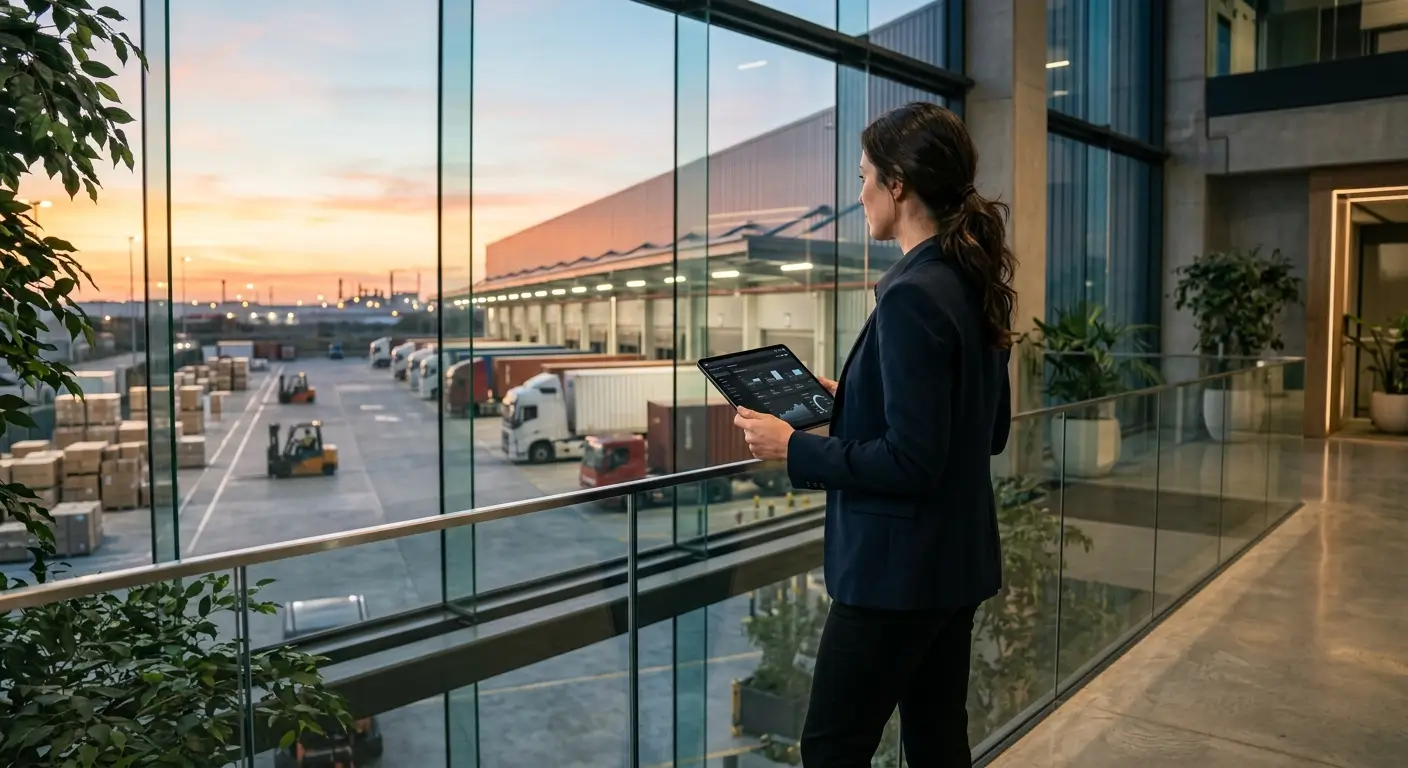
Before, companies lived on the edge, without inventory. Now, after seeing empty shelves, this new production strategy has shifted to “Just-in-Case.” They prefer to have the warehouse nearby and full than to pray that a typhoon doesn’t delay their merchandise for three months. In the end, peace of mind has a price, too.
3. The engines of the great move (It’s not just logistics, it’s politics)
If you thought this was only about ships and trucks, I’m sorry to tell you there’s more drama behind this trend:
- Schoolyard fights (Geopolitics): The tension between the U.S. and China has made relying on Asia look like an “extreme risk.” Enter friendshoring: producing in allied and stable countries.
- The planet thanks us: Bringing a product from the other side of the Pacific pollutes a huge amount. Reducing distance is the fastest way for companies to improve their environmental footprint.
- Alignment of the stars (and schedules): Working with someone who wakes up at the same time as you makes things a lot easier. Coordinating a Zoom call is much simpler when you don’t have to wait for the other party to finish dinner.
4. Mexico: The “influencer” of industrial relocation
If nearshoring were a movie, Mexico would be the lead actor who lands the starring role. In 2023, Mexico took over China’s spot as the U.S.’s main trading partner (insert dramatic pause here).
This phenomenon of industrial relocation has a clear engine: the “Tesla Effect.” When large companies decide to set up their plants on Mexican soil, the message is powerful. The reasons? Plenty of qualified engineers and a strategic location that allows a product to be in Texas in less than 24 hours. By sea, from Asia, it could take 40 days… if you’re lucky.
5. Eastern Europe: The workshop of the European Union
While Mexico shines in the Americas, countries like Poland, Romania, or Hungary are doing impeccable work for Western Europe. German and French companies have discovered that it is much more practical to manufacture components in Poland than to bring them from afar. They have competitive costs, are within the EU, and, most importantly, they can forget about nightmarish customs. It’s the winning combo for regional production.
6. Not everything is rosy (The challenges of the new model)
This might not please everyone, but moving a factory isn’t as easy as assembling IKEA furniture.
- The war for talent: Since everyone is arriving at once, finding prepared workers is now a pitched battle. Salaries are rising (good for the workers) and the cost advantage is shrinking (a challenge for the CEO).
- Is the house wired for it?: In many industrial reception areas, infrastructure is pushed to the limit. If you want to build a mega-factory but the local power grid can’t even handle an extra toaster, we have a serious problem.
Conclusion: The future is regional (and more sensible)
The conclusion is clear: we have moved from wild globalization to sensible globalization. Companies are no longer looking just for the cheapest cent, but for the assurance that their product will reach the store before it goes out of style.
For business leaders, the question is no longer if they should bring their production closer, but when. Resilience is the new currency, and nearshoring is the best way to stay in the game through the use of well-focused digital marketing strategies and operations.
A small parting tip: If you want to be the smartest person at the next company dinner, keep an eye on how software development in Latin America is following in the footsteps of manufacturing. It’s the same concept, but in a digital format.
What about you? Do you prefer something cheap that arrives in three months or something a little more expensive that you have at your door tomorrow? Think about it, because the market has already made its decision.